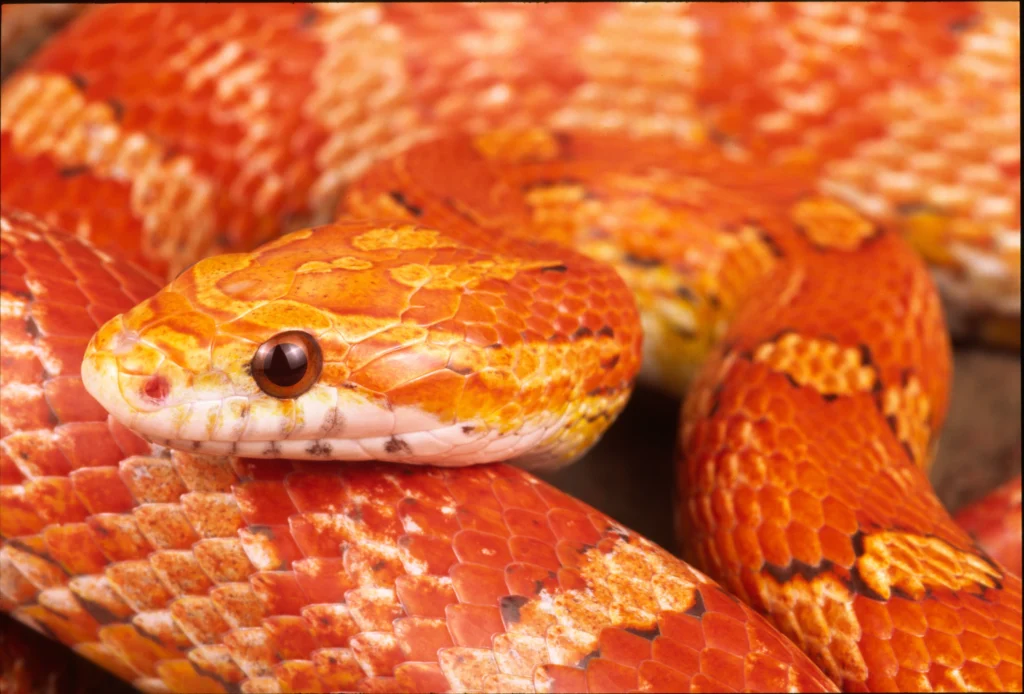

Corn snakes have long been treasured in the reptile community for their gentle temperament, manageable size, and vibrant appearance. Yet one aspect of the species stands above all others in fueling its popularity: corn snake morphs. Over the past several decades, breeders have transformed the humble wild-type corn snake into a living palette of colors and patterns, producing hundreds of unique variations. These morphs do more than simply look beautiful—they represent genetic diversity, selective breeding mastery, and the limitless potential of reptile genetics.
This article offers a comprehensive, in-depth look at corn snake morphs, including how morphs develop, how genetics shape their appearance, the major categories of morphs, rare and designer combinations, and what keepers should consider when choosing one. Whether you are a seasoned herpetologist, a hobbyist breeder, or a beginner fascinated by reptile color genetics, this guide will help you understand the remarkable world of corn snake morphs.
1. What Exactly Is a Corn Snake Morph?
A morph (short for morphological variation) refers to any corn snake that displays a genetic difference from the typical appearance found in wild populations. These differences can be:
- Color mutations (affecting pigments such as melanin, carotenoids, or other color-producing compounds)
- Pattern mutations (altering saddles, striping, or spot distribution)
- Compound or designer mutations (multiple genes expressing at once to create a unique appearance)
Morphs arise naturally through random genetic mutation, but humans have selectively bred them for stability, intensity, and diversity.
A wild corn snake typically displays:
- Bright orange or reddish base color
- Black-bordered saddle markings
- Checkered black-and-white belly
- Clear pattern differentiation along the dorsal and lateral surfaces
Morphs often alter one or more of these features dramatically.
2. Understanding Corn Snake Color Genetics
Corn snake morphs depend heavily on genetics—dominant, recessive, and codominant alleles that work together to influence phenotype. While this article avoids overly technical genetic diagrams, a basic understanding helps explain why morphs look the way they do.
2.1 Recessive Mutations
A recessive morph requires two copies of a gene (one inherited from each parent) to be visually expressed. Many of the most popular corn snake morphs—such as amelanistic, anerythristic, and lavender—are recessive.
A snake may also be a het (heterozygous), meaning it carries one copy of a recessive gene without displaying it. Breeders often pair hets to produce visually stunning recessive morphs.
2.2 Dominant Mutations
With dominant traits, only one copy is needed for visual expression. These are less common in corn snakes but exist in traits like motley pattern or certain striping influences.
2.3 Codominant (Incomplete Dominant) Mutations
Codominant traits express differently depending on whether there is one or two copies of a gene. While corn snakes have fewer codominant morphs compared to certain python species, some still show layered expression or increased intensity in “super” forms.
2.4 Polygenic Traits
Some traits develop through the combined influence of many genes. Examples include:
- High red saturation
- Reduced black borders
- Enhanced stripe clarity
- Diffused belly patterning
Breeders often selectively enhance these polygenic traits over many generations.
3. Major Categories of Corn Snake Morphs
Corn snake morphs generally fall into four categories:
- Color Mutations
- Pattern Mutations
- Compound Morphs
- Designer and Line-bred Variants
Below is an in-depth exploration of each.
4. Color Morphs: The Building Blocks of Corn Snake Appearance
Color morphs focus on altering the pigments that give corn snakes their traditional red, orange, yellow, and black coloration.
4.1 Amelanistic (Amel)
One of the earliest and most iconic morphs, the amelanistic corn snake lacks melanin (black pigment). This makes their colors appear:
- Bright orange or red body
- Pink or red eyes
- White or pale yellow markings
Amels form the basis of many multi-gene morphs because eliminating black allows other colors to shine with greater intensity.
4.2 Anerythristic (Anery)
An anerythristic corn snake lacks erythrin (red pigment). Instead, it displays:
- Silver, gray, or charcoal tones
- Black or dark gray saddles
- Reduced warm colors but strong contrast
Anery forms the foundation of many grayscale or ghost-type morphs.
4.3 Hypomelanistic (Hypo)
Hypo corn snakes have reduced melanin, not total absence. They appear:
- Softer, gentler color tones
- Clearer patterns
- Reduced black borders
Different lines of hypo include Hypo A, Hypo B, and Orange Hypo.
4.4 Lavender
Lavender corn snakes have a dreamy, pastel-like hue. Their appearance includes:
- Purplish or smoky gray tones
- Muted oranges
- Soft eyes with a pinkish or lavender tint
Lavenders are highly prized for their unique color palette.
4.5 Caramel
Caramel morphs express rich yellows, golds, and caramels instead of red. They often have:
- Buttery or honey-colored saddles
- Soft brown borders
- Clear yellow belly tones
Caramels produce many notable designer morphs when combined with amelanism.
4.6 Ultramel
Ultramel is a mutation blending two different alleles at the same locus (ultra and amel). They produce:
- Warm, glowing oranges and yellows
- Softened black outlines
- A vibrant yet pastel-like overall appearance
4.7 Diffused (Bloodred Line)
Although technically categorized as a pattern and belly morph, diffused corn snakes often appear deeply saturated in reds and oranges, especially when line-bred.
5. Pattern Morphs: When the Color Stays the Same, but the Layout Changes Completely
Pattern mutations alter the placement, thickness, or shape of markings.
5.1 Motley
The Motley pattern reduces side blotches and arranges dorsal saddles into connected or semi-connected shapes. Motleys may display:
- Ladder-like dorsal pattern
- Clean, unmarked belly
- Smooth, flowing transitions
Motley is a dominant trait that forms beautifully with hypo or ultramel colors.
5.2 Striped
Striped corn snakes have linear markings running from head to tail. Stripes can be:
- Bold and solid
- Thin and broken
- Wide bands running across the body
Striping is often used in designer morphs like Striped Ghosts or Striped Amels.
5.3 Tessera
Tessera is one of the most visually striking and popular pattern morphs. Characteristics include:
- Crisp side pattern resembling mosaic tiles
- Distinct, clean dorsal stripe
- High contrast and symmetry
Tessera is dominant and produces unique expressions in almost every pairing.
5.4 Diffused
Diffused corn snakes lack the traditional belly checkering and often show:
- Solid body colors
- Ghostlike belly with minimal markings
- Reduced pattern intensity
Diffused snakes form the foundation of the Bloodred line.
5.5 Pied-sided
Pied-sided corn snakes express irregular patches of white along the sides and belly. Each individual is unique, making them excellent collector morphs.
6. Compound Morphs: When Multiple Genes Work Together
Many of the most stunning corn snake morphs are combinations of two or more recessive and/or dominant genes.
Here are some famous compound morphs:
6.1 Snow
A combination of amelanistic and anerythristic. Snows appear:
- White or pink
- Pale lavender saddles
- Clear, soft tones
6.2 Ghost
Created by combining hypo with anerythristic traits. Ghost corn snakes show:
- Muted silver and beige tones
- Soft outlines
- Beautifully gentle coloration
6.3 Butter
A combination of amelanistic and caramel. Butter morphs show:
- Rich gold tones
- High yellow saturation
- Almost glowing appearance
6.4 Amber
Combining caramel and hypo creates an amber look:
- Buttery orange tones
- Warm yellows
- Reduced black borders
6.5 Opal
A snow combined with hypo. Opals often look pastel, pinkish, and delicate.
6.6 Lavender Snow (aka Coral Snow)
Snow + lavender creates vibrant:
- Pinkish hues
- Subtle purple outlines
- High visual appeal
6.7 Plasma
Lavender + diffused produce plasma morphs:
- Smoky lavender bodies
- Faded patterns
- Dreamlike appearance
6.8 Palmetto
Technically a leucistic morph with dark speckles, palmettos are:
- Pure white snakes
- Random colorful spots
- One of the most visually unique corn snakes ever bred
7. Designer Morphs and Line-Bred Variants
Designer morphs are intentional genetic combinations that produce artistic or refined results. Some well-known designer traits include:
- High-red variants
- Extreme reverse okeetee (thick black borders)
- Candy-cane (white and red, line bred from amel)
- Sun-kissed (faded saddles with bright tones)
- Lava line (enhanced saturation and smooth patterns)
These are not always simple genetic mutations; they often require many generations of selective breeding to refine.
8. Rare and Unusual Corn Snake Morphs
Some morphs appear so infrequently that they fetch premium prices. Examples include:
- Sunkissed Striped Ghost
- Pied-sided Palmetto
- Lavender Tessera Motley
- Cinder morphs and Cinder combinations
- Charcoal + anything (for dark grayscale morphs)
Each rare morph offers unique expression, subtle hue differences, and high collector value.
9. How Breeders Create New Morphs
Creating a new morph involves:
9.1 Identifying a Novel Genetic Mutation
Breeders notice subtle changes like reduced melanin, unusual striping, or new coloration.
9.2 Test Breeding
They pair the unusual animal with normal or known morphs to determine inheritance patterns.
9.3 Establishing Stability
A morph becomes recognized when:
- It consistently passes to offspring
- It shows predictable genetic behavior
- Its visual traits remain stable across generations
9.4 Enhancing Aesthetic Traits
Line breeding refines color brightness, saturation, clarity, and contrast.
10. Ethical Breeding Considerations
With the explosion of morph diversity, ethical breeding matters more than ever.
10.1 Avoiding Overbreeding
Breeding should focus on strong genetics, not just producing as many morphs as possible.
10.2 Maintaining Genetic Health
Inbreeding can lead to deformities or weak offspring. Responsible breeders introduce new bloodlines regularly.
10.3 Transparency
Breeders must accurately label hets and visual morphs to ensure honesty within the hobby.
10.4 No Breeding for Harmful Traits
Corn snakes are generally robust, but any mutation causing health issues should be discontinued.
11. Choosing a Corn Snake Morph as a Pet
When selecting a morph, consider the following:
11.1 Visual Preference
Do you prefer:
- Bright, neon colors?
- Soft, pastel hues?
- High-contrast patterns?
- Minimalist or diffused patterns?
- Wild-type inspired looks?
11.2 Budget
Morphs range from very affordable to extremely rare and costly.
11.3 Ease of Identification
Some morphs change color as they mature. Lavender, snow, and ghost often look quite different as adults.
11.4 Compatibility if Breeding
Consider:
- Are morphs recessive, dominant, or co-dominant?
- Will your pairs produce visually interesting clutches?
- Are you prepared to track hets?
12. The Future of Corn Snake Morph Development
Corn snakes continue to be one of the most genetically diverse reptile species kept in captivity. As more breeders experiment with combining recessive color mutations with complex pattern traits, new morphs will continue to emerge.
Future trends may include:
- More pied variants with larger white patches
- Enhanced saturation lines that push the limits of red and yellow
- Multigene combos involving tessera, motley, and diffused together
- Stronger grayscale and charcoal-based designer morphs
- Novel morphs arising from spontaneous mutation
With stable genetics and a wide breeding population, corn snakes remain an open canvas for innovation.
Conclusion
Corn snake morphs represent one of the most extraordinary achievements in reptile breeding. From simple single-gene mutations like amelanism to the dazzling artistry of palmettos and plasma morphs, corn snakes offer unparalleled diversity and beauty. Their genetics are approachable, their care is straightforward, and their appearance can be tailored across hundreds of combinations. For hobbyists, breeders, educators, and reptile enthusiasts alike, corn snake morphs provide a never-ending source of fascination.
Whether you seek a classic bright orange amelanistic snake, a rare mosaic-patterned tessera, or a unique multi-gene designer morph, the world of corn snakes holds something for every imagination. As breeders continue innovating and refining traits, the future promises even more spectacular and unexpected variations in this already breathtaking species.