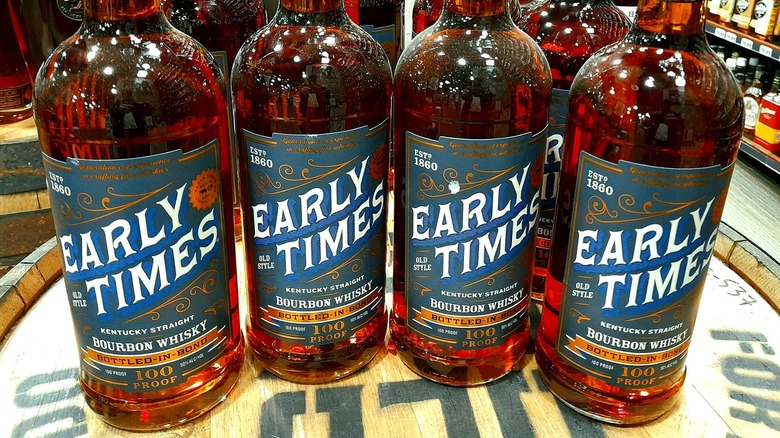

When people talk about American whiskey, the conversation often turns to big names, bold flavors, and rich traditions that stretch back generations. Among these traditions, Early Times Bottled in Bond stands out not just as a whiskey, but as a symbol of a particular era, philosophy, and commitment to quality. This article explores Early Times Bottled in Bond in depth—its historical roots, what “bottled in bond” truly means, how this whiskey is crafted, its flavor profile, cultural significance, and why it continues to matter in a modern whiskey landscape filled with endless choices.
Understanding the Origins of Early Times
The story of Early Times begins with the broader story of American whiskey itself. In the 19th century, whiskey production in the United States was still finding its identity. Distillers relied on local grains, traditional methods, and a lot of trial and error. During this period, whiskey was often sold straight from the barrel, sometimes unaged, sometimes adulterated, and rarely consistent from batch to batch.
Early Times emerged as a brand rooted in the idea of honoring older methods—“early times” quite literally referring to the earlier days of whiskey-making when simplicity, patience, and craftsmanship mattered more than marketing or mass production. The name evokes nostalgia, but it also reflects a genuine respect for tradition.
Over time, Early Times became associated with approachable, honest whiskey—something that didn’t try to impress through gimmicks, but instead delivered dependable quality at a reasonable price. This reputation laid the foundation for what would later become Early Times Bottled in Bond.
What “Bottled in Bond” Really Means
To understand Early Times Bottled in Bond, it’s essential to understand the Bottled-in-Bond Act of 1897. This piece of legislation was a turning point in American whiskey history.
Before the act, consumers had little protection. Whiskey could be diluted, colored, or flavored with questionable substances. Some products labeled as whiskey contained very little actual whiskey at all. The Bottled-in-Bond Act was designed to protect consumers and reward distillers who followed strict standards.
For a whiskey to be labeled “bottled in bond,” it must meet several requirements:
- It must be the product of a single distillation season (either spring or fall).
- It must come from one distillery.
- It must be aged for at least four years.
- Aging must take place in a federally bonded warehouse under government supervision.
- It must be bottled at exactly 100 proof (50% alcohol by volume).
These rules were not easy to follow, especially at a time when distilling was already a risky business. Choosing to release a bottled-in-bond whiskey was a statement: a promise of authenticity, transparency, and quality.
Early Times Bottled in Bond proudly carries this designation, signaling that it adheres to a standard that is more than a century old.
The Philosophy Behind Early Times Bottled in Bond
Early Times Bottled in Bond is not about chasing trends. It does not rely on flashy packaging or exaggerated claims. Instead, it reflects a philosophy centered on balance, consistency, and respect for the past.
At its core, this whiskey is meant to be accessible. It’s designed for people who genuinely enjoy whiskey, whether they are seasoned enthusiasts or newcomers exploring bottled-in-bond expressions for the first time. The goal is not to overwhelm the drinker with extreme flavors, but to provide a well-rounded experience that feels familiar yet satisfying.
This philosophy also respects the idea that whiskey should be versatile. Early Times Bottled in Bond can be sipped neat, enjoyed with a splash of water, poured over ice, or used in classic cocktails. That flexibility is part of its enduring appeal.
Craftsmanship and Production Approach
While specific technical details can vary over time, the essence of Early Times Bottled in Bond lies in traditional American whiskey-making practices.
Grain Selection
American bottled-in-bond whiskey typically relies heavily on corn, supported by smaller amounts of secondary grains such as rye or malted barley. Corn provides sweetness and body, while rye can add spice and structure. Malted barley contributes enzymes necessary for fermentation and adds subtle grain complexity.
The grain bill used for Early Times Bottled in Bond aims for balance rather than dominance. No single grain overpowers the others, allowing the final product to feel cohesive.
Fermentation and Distillation
Fermentation is where raw ingredients begin their transformation into whiskey. Yeast converts sugars into alcohol while creating flavor compounds that later shape the spirit’s character. Traditional fermentation methods emphasize consistency and control, ensuring each batch remains faithful to the intended profile.
Distillation refines the fermented mash into a clear spirit. For bottled-in-bond whiskey, distillation is typically done in a way that preserves flavor rather than stripping it away. The resulting distillate retains enough character to develop complexity during aging.
Aging in Bonded Warehouses
One of the most important aspects of Early Times Bottled in Bond is its aging process. The whiskey must spend at least four years in a federally bonded warehouse. These warehouses are monitored to ensure proper conditions and prevent tampering.
Aging allows the whiskey to interact with the wood of the barrel. Over time, it draws out flavors such as vanilla, caramel, oak, and spice. Temperature changes cause the whiskey to expand and contract within the barrel, deepening this interaction and building complexity.
Four years may sound modest compared to some ultra-aged whiskeys, but for bottled-in-bond expressions, it often strikes an ideal balance between youthful vibrancy and mature depth.
Flavor Profile: What to Expect in the Glass
Early Times Bottled in Bond is often praised for its straightforward yet satisfying flavor profile. While individual perceptions vary, certain characteristics tend to define the experience.
Aroma
On the nose, this whiskey typically presents classic American whiskey notes. Sweet corn, light caramel, and vanilla often appear first. These are followed by gentle oak and hints of baking spices. The aroma is inviting rather than aggressive, setting the tone for what’s to come.
Palate
The first sip delivers a solid, medium-bodied mouthfeel. Sweetness from the corn is balanced by spice and oak. Flavors may include caramel, toffee, vanilla, and a touch of cinnamon or black pepper. The 100-proof strength gives it presence without overwhelming the palate.
What stands out most is balance. No single note dominates, making it easy to appreciate each component as they work together.
Finish
The finish is typically warm and moderately long. Oak and spice linger, with a gentle sweetness fading slowly. It leaves a clean impression, encouraging another sip rather than demanding one.
Early Times Bottled in Bond in Cocktails
One of the reasons Early Times Bottled in Bond has earned respect among bartenders and home mixologists is its performance in cocktails.
The 100-proof strength ensures that it doesn’t disappear when mixed with other ingredients. At the same time, its balanced flavor profile allows it to complement rather than clash with classic cocktail components.
Classic Old Fashioned
In an Old Fashioned, Early Times Bottled in Bond provides a sturdy backbone. Its sweetness pairs well with sugar, while its spice and oak enhance the bitters. The result is a cocktail that feels traditional and satisfying.
Whiskey Sour
In a Whiskey Sour, the whiskey’s structure stands up to citrus and sweetness. The bottled-in-bond proof keeps the drink from becoming thin, delivering a refreshing yet flavorful experience.
Manhattan
For a Manhattan, Early Times Bottled in Bond blends smoothly with sweet vermouth. The whiskey’s spice and oak interact beautifully with herbal notes, creating a well-rounded cocktail.
Cultural and Historical Significance
Early Times Bottled in Bond is more than just a drink; it represents a connection to American history. The bottled-in-bond designation itself is a reminder of a time when government intervention was necessary to protect consumers and preserve integrity in the marketplace.
By continuing to produce a bottled-in-bond expression, the brand honors that legacy. It keeps alive a standard that might otherwise be forgotten in a world increasingly focused on novelty and experimentation.
For many whiskey lovers, drinking a bottled-in-bond whiskey feels like participating in a tradition. It’s a way of experiencing something that links the present to the past.
Why Early Times Bottled in Bond Still Matters Today
In today’s whiskey market, consumers are flooded with options. Limited editions, exotic finishes, and experimental blends dominate headlines. While innovation has its place, it can sometimes overshadow the fundamentals.
Early Times Bottled in Bond reminds drinkers why those fundamentals matter. It demonstrates that a well-made, traditionally crafted whiskey can still hold its own without excessive aging or elaborate marketing.
Its affordability also plays a role. By offering quality at a reasonable price, it challenges the notion that good whiskey must be expensive. This accessibility helps keep whiskey culture inclusive rather than exclusive.
Comparing Tradition and Modern Expectations
Modern whiskey drinkers often seek bold flavors and unique stories. Early Times Bottled in Bond offers a different kind of story—one rooted in continuity and reliability.
While it may not surprise the palate in dramatic ways, it rewards attention. Over time, subtle nuances emerge, especially when tasted slowly or compared with other bottled-in-bond whiskeys. This makes it an excellent educational whiskey for those looking to understand the core characteristics of American whiskey styles.
The Emotional Connection to Early Times Bottled in Bond
For many people, whiskey is tied to memories—family gatherings, quiet evenings, or meaningful conversations. Early Times Bottled in Bond often becomes part of these moments because of its approachable nature.
It doesn’t demand ceremony, yet it feels appropriate when a moment deserves something special. This emotional versatility is one of its greatest strengths.
Final Thoughts
Early Times Bottled in Bond stands as a testament to the enduring power of tradition in American whiskey. It honors the principles laid out more than a century ago while remaining relevant in a modern context. Through its commitment to bottled-in-bond standards, balanced flavor profile, and accessible character, it offers an experience that is both authentic and enjoyable.