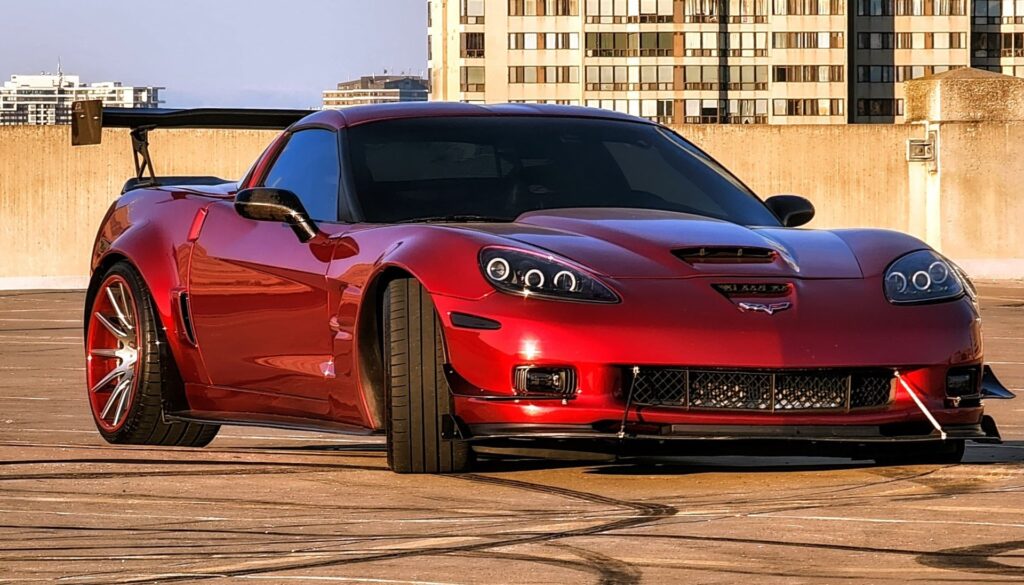

The Chevrolet Corvette C6 Z06 is a name etched into the history of American sports cars. Launched in 2006 for the 2006 model year, the C6 Z06 was built to be a high‑performance variation of the sixth‑generation Corvette — an embodiment of raw engineering with a strong focus on speed, handling, and driving purity.
A Legacy of Performance — What Makes the C6 Z06 Special
When the C6 Z06 arrived, it drew crowds for its muscular aesthetics and exceptional mechanical upgrades over the standard Corvette C6. The most notable feature was its 7.0‑liter LS7 naturally aspirated V8 engine, producing 505 horsepower and 470 lb‑ft of torque — figures that were extraordinary for a production‑car of its era.
But power wasn’t its only claim to fame. Chevrolet also implemented several weight‑saving strategies, such as:
- A lightweight aluminum chassis
- Carbon fiber components
- A dry‑sump oil system
- Titanium connecting rods
These helped the Z06 shed significant mass compared to the base model, boosting acceleration and agility.
Performance Stats That Still Impress
Even years after its release, the C6 Z06 remains quick by modern standards:
- 0–60 mph in around 3.6 seconds
- Quarter‑mile times in the low 11‑second range
- A total curb weight near 3,180 pounds
These numbers positioned the Z06 as an affordable supercar rival at the time of its debut. Flickr
Track‑Ready Dynamics
Performance isn’t just about straight‑line speed — it’s also about control. Chevrolet equipped the C6 Z06 with:
- Stiffer suspension tuned for performance
- Wider front and rear tires for better grip
- Larger brakes with multi‑piston calipers
- Optimized aerodynamics for high‑speed stability
These upgrades made the Z06 not just powerful, but well‑balanced on tight back roads and on the racetrack.
Design: Aggressive Yet Balanced
Visually, the C6 Z06 stands apart from its siblings thanks to design cues such as:
- A fixed roof with more aggressive stance
- Larger front and rear fenders
- Sculpted side sills
- Functional air intakes and cooling ducts
This blend of form and function gave it an unmistakable presence — hinting at its performance abilities even when standing still. Flickr
Interior and Driver Experience
The interior of the Z06 focused on driving engagement rather than luxury. It included:
- A sport‑oriented cockpit layout
- Supportive seats for aggressive cornering
- Optional performance gauge packages
Drivers praised the Z06’s communicative steering and balanced chassis, which contributed to a rewarding experience whether on the street or on track.
Technology and Features
While the C6 Z06 didn’t use cutting‑edge hybrid systems or turbochargers like today’s supercars, its mechanical purity was part of its enduring charm. Manual transmissions were the norm, and electronic driver aids were kept to a level that enhanced — but didn’t replace — driver skill.
Enduring Appeal in the Modern Age
Even years after production ended in 2013, the C6 Z06 maintains a strong enthusiast following. It’s often regarded as one of the best “bang‑for‑buck” performance cars, with many owners and fans praising:
- The raw V8 power
- The balance of performance and price on the used market
- The mechanical simplicity that appeals to tuners and collectors alike
Discussions and owner forums often highlight how accessible and enjoyable these cars remain for weekend track days, autocross events, and spirited road use.
Buying and Ownership Perspective
On the used market, the Corvette C6 Z06 is typically more desirable (and pricier) than standard C6 trims because of its performance pedigree. While prices vary by condition, mileage, and location, many enthusiasts see it as a great entry point into high‑performance sports cars without the cost of European rivals.
Maintenance is generally straightforward for a performance car of this age, with plenty of aftermarket parts and community support available.
Legacy and Impact
The C6 Z06 helped reinforce Corvette’s reputation as an American performance icon. It showed that a front‑engine, rear‑drive sports car could offer world‑class results without an exorbitant price tag. Its combination of power, balance, and driver engagement keeps it relevant — even as newer generations push performance boundaries further.
This model remains a celebration of unobstructed, classic muscle‑car spirit: big engine, tight chassis, and an unforgettable V8 soundtrack.