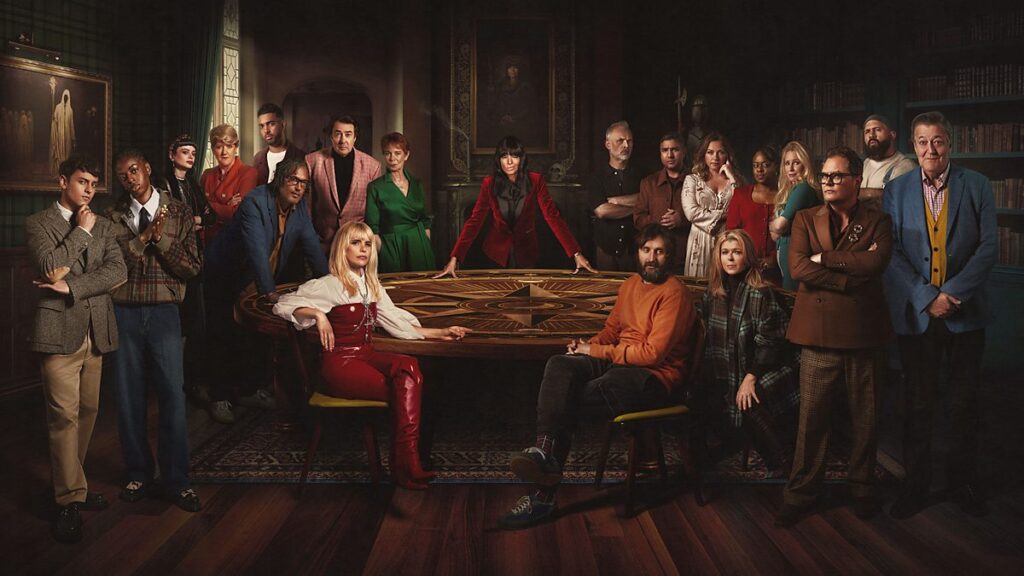

Reality television has evolved far beyond simple competitions and flashy challenges. In recent years, audiences have shown a strong appetite for shows that explore human psychology, deception, and social strategy. One title that perfectly captures this shift is The Traitors.
Among its most compelling formats are the celebrity Traitors episodes, which elevate the experience by introducing well-known public figures into a high-stakes environment where trust is fragile and betrayal is rewarded. These episodes blend fame with fear, strategy with emotion, and entertainment with genuine psychological tension.
This article explores the celebrity Traitors episodes in depth, examining what makes them unique, how celebrity casting changes the dynamics of the game, and why these episodes have become such a powerful draw for viewers around the world.
What Are the Celebrity Traitors Episodes?
At its core, The Traitors is a social deduction game disguised as a reality competition. Contestants live together in an isolated setting, complete challenges to build a shared prize fund, and secretly play one of two roles: Faithfuls or Traitors.
In celebrity Traitors episodes, the format remains the same, but the cast is made up of actors, presenters, athletes, comedians, and public personalities rather than everyday contestants. While the rules do not change, the psychological environment does.
Celebrities enter the game with:
- Established public images
- Media training and performance experience
- Pre-existing relationships or rivalries
- A heightened awareness of audience perception
These factors dramatically reshape the way the game unfolds.
Why Celebrity Editions Change the Game Entirely
1. Reputation Becomes a Strategic Weapon
In regular seasons, contestants are judged primarily on behavior inside the game. In celebrity Traitors episodes, however, reputation precedes reality. Players are often suspected—or trusted—based on how they are perceived outside the show.
A comedian may be dismissed as “too silly” to be dangerous.
A serious broadcaster might be viewed as overly calculated.
This creates a fascinating layer of gameplay where external identity influences internal survival.
2. Performance vs. Authenticity
Celebrities are used to being watched. Many have spent years performing in front of cameras, which raises an important question:
Are they being themselves—or playing a role?
In celebrity Traitors episodes, emotional moments often feel intensified because viewers are constantly trying to decode what is real. When a celebrity cries, defends themselves, or accuses another player, the audience is left wondering whether it’s strategy, stress, or sincere emotion.
This tension between performance and authenticity is one of the defining features of the celebrity format.
3. Stronger Personal Stakes Than Expected
One might assume that celebrities would be less emotionally invested, especially if prize money is often donated to charity. Surprisingly, the opposite is often true.
For many participants, the real stakes are:
- Personal pride
- Public credibility
- Professional image
Being labeled untrustworthy on national television can have lasting consequences. This makes betrayals feel more personal and accusations more intense, even when money is not the primary motivator.
The Role of the Host in Celebrity Traitors Episodes
The host is not just a presenter; they are a psychological anchor. In many versions of the show, including the most well-known adaptations, Claudia Winkleman plays a central role in setting the tone.
In celebrity episodes, the host must:
- Maintain authority over famous contestants
- Balance drama with fairness
- Guide discussions without revealing bias
The host’s presence becomes even more important when contestants are confident, outspoken, and media-savvy. A strong host ensures that the game remains tense, structured, and unpredictable.
Key Moments That Define Celebrity Traitors Episodes
The First Round Table
The opening round table is often one of the most chaotic moments in celebrity editions. With little evidence to go on, accusations are frequently based on:
- Body language
- Tone of voice
- Pre-existing assumptions
Celebrities tend to speak confidently, which can either save them or put a target on their back early.
The First Betrayal
When a celebrity Traitor betrays another contestant for the first time, it often becomes a defining moment of the season. Unlike anonymous players, celebrities are recognizable, making their actions feel more impactful.
These betrayals often generate:
- Strong emotional reactions
- Shifts in alliance structures
- Long-lasting grudges
The Turning Point Episode
Every celebrity Traitors season has an episode where the balance of power shifts. A single misstep, overheard comment, or emotional outburst can change the direction of the game completely.
Because celebrities are skilled communicators, these moments often involve verbal battles, persuasive speeches, and dramatic defenses that feel closer to political debates than reality TV arguments.
Strategy in Celebrity Traitors Episodes
How Celebrity Faithfuls Adapt
Celebrity Faithfuls often rely less on raw suspicion and more on pattern recognition. Many are experienced in reading people, especially those who work in media or performance.
Successful Faithful strategies include:
- Staying quiet early to avoid attention
- Asking indirect questions instead of making accusations
- Letting louder personalities clash while observing from a distance
How Celebrity Traitors Hide in Plain Sight
Celebrity Traitors face a unique challenge: they must deceive without appearing manipulative. The most effective Traitors in celebrity episodes tend to:
- Be emotionally consistent
- Avoid leading accusations
- Let others make mistakes
Rather than controlling the room, they often survive by blending into group dynamics.
Psychological Pressure and Mental Fatigue
One of the least discussed but most important aspects of celebrity Traitors episodes is mental exhaustion. Filming schedules, isolation, constant suspicion, and lack of privacy take a toll on participants.
Even seasoned celebrities are not immune to:
- Paranoia
- Sleep deprivation
- Emotional overload
As episodes progress, cracks begin to show. Players who started confident may become defensive, while quiet contestants suddenly emerge as strategic leaders.
Why Audiences Love Celebrity Traitors Episodes
Familiar Faces in Unfamiliar Roles
Seeing celebrities stripped of scripts, teams, and handlers creates a powerful viewing experience. Audiences are drawn to the idea of watching famous individuals navigate uncertainty without protection.
High-Quality Drama Without Artificial Twists
Unlike many reality shows that rely on forced drama, The Traitors allows tension to develop naturally. Celebrity episodes enhance this by placing strong personalities in situations where every word matters.
Water-Cooler Conversations and Social Buzz
Celebrity Traitors episodes are designed for discussion. Viewers debate strategies, argue over fairness, and speculate about hidden motives. This social engagement is a major reason the format thrives.
The Cultural Impact of Celebrity Traitors Episodes
Beyond entertainment, these episodes contribute to a broader conversation about:
- Trust and deception
- Group psychology
- The difference between public image and private behavior
They challenge viewers to question their own instincts and biases. Who do we trust, and why? How quickly do assumptions turn into accusations?
The Future of Celebrity Traitors Episodes
As the format continues to grow, celebrity Traitors episodes are likely to become more refined rather than more exaggerated. The strength of the show lies in its simplicity, and over-production could weaken its impact.
Future seasons may explore:
- More diverse celebrity backgrounds
- Greater focus on psychological storytelling
- Deeper exploration of moral dilemmas
What remains certain is that the celebrity version of The Traitors has secured its place as one of the most intellectually engaging reality formats of modern television.
Final Thoughts
The celebrity Traitors episodes succeed because they reveal something rare in reality TV: unfiltered human behavior under pressure, even from those accustomed to being in control. Fame does not protect players from suspicion, fear, or regret. If anything, it amplifies them.
By combining recognizable faces with a ruthless social experiment, The Traitors creates episodes that are tense, emotional, and deeply memorable. Whether you watch for strategy, psychology, or pure drama, celebrity Traitors episodes offer an experience that lingers long after the final banishment.