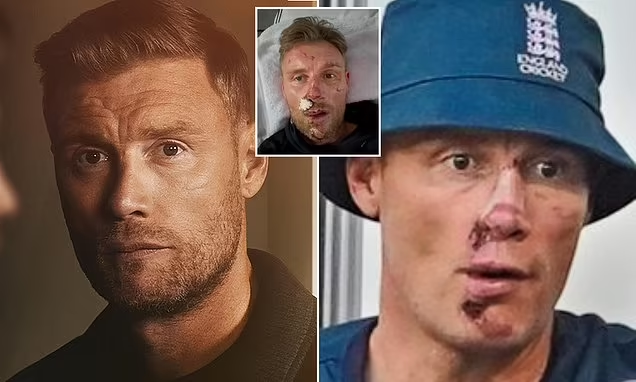

The phrase “Freddie Flintoff face” has become a widely searched topic in recent years, not because of celebrity gossip, but due to genuine public concern and curiosity surrounding the dramatic facial injuries suffered by Andrew “Freddie” Flintoff. As one of Britain’s most recognizable sports figures and television personalities, Flintoff’s appearance has always been part of his public identity. When that suddenly changed, people wanted to understand what happened, how severe the injuries were, and what his recovery meant both physically and emotionally.
Who Is Freddie Flintoff?
Before understanding why the topic of Freddie Flintoff’s face gained such attention, it’s important to recognize who he is and why he matters to the public.
Andrew Flintoff, widely known as Freddie Flintoff, is a former England international cricketer, regarded as one of the greatest all-rounders in the history of English cricket. His powerful batting, aggressive fast bowling, and fearless attitude made him a national hero, particularly during England’s iconic Ashes victories.
After retiring from professional cricket, Flintoff successfully transitioned into television, becoming a familiar face on British screens. His larger-than-life personality, humor, and authenticity helped him build a second career in entertainment, including sports commentary and high-profile TV shows.
Because of this strong public presence, any visible change to his face naturally drew attention.
The Incident That Changed Everything
The intense interest in Freddie Flintoff’s face stems from a serious accident during the filming of a television motoring program. What was supposed to be controlled entertainment turned into a life-altering event.
During the filming of a high-speed segment, Flintoff was involved in a crash that resulted in severe facial injuries. Although safety measures were reportedly in place, the impact was significant enough to cause long-term damage, particularly to his face.
Unlike minor on-screen accidents that are quickly forgotten, this incident had lasting consequences. Flintoff was immediately withdrawn from public view, fueling speculation, concern, and widespread media discussion.
Nature of Freddie Flintoff’s Facial Injuries
While exact medical details were not widely disclosed out of respect for privacy, it became clear that Freddie Flintoff’s face suffered extensive trauma.
Visible Injuries
When Flintoff eventually reappeared in public, noticeable scarring and facial changes were evident. These included:
- Scars across parts of his face
- Structural damage affecting facial symmetry
- Signs of reconstructive procedures
These changes were not superficial. Facial injuries of this nature often involve broken bones, soft tissue damage, and nerve trauma, all of which can take years to heal fully.
Emotional Weight of Facial Trauma
The face is deeply tied to personal identity. For someone whose career depends heavily on public recognition and confidence, facial injuries can be especially challenging.
Freddie Flintoff later spoke openly about how difficult it was to come to terms with his appearance. The psychological impact was as real as the physical pain.
The Psychological Impact: More Than Skin Deep
When people search for “Freddie Flintoff face”, they are often unknowingly touching on a deeper issue: the mental and emotional toll of facial disfigurement.
Loss of Identity
Flintoff admitted that seeing his reflection was difficult. For someone who had spent decades being comfortable in the public eye, the sudden change was shocking.
Facial injuries can cause:
- Loss of self-confidence
- Social anxiety
- Depression or emotional withdrawal
- Fear of public judgment
Struggle With Public Exposure
Following the accident, Flintoff avoided cameras for an extended period. This wasn’t due to vanity, but rather the need to mentally process what had happened.
The public often expects celebrities to “bounce back” quickly. Flintoff’s honesty about needing time made his story more relatable and human.
The Road to Recovery
Recovery from severe facial injuries is rarely straightforward. In Flintoff’s case, it involved multiple layers of healing.
Physical Recovery
Facial trauma often requires:
- Reconstructive surgery
- Long-term medical monitoring
- Rehabilitation to restore movement and sensation
Healing can take months or even years, and scars may never fully disappear. Flintoff’s face became a symbol not of damage, but of survival.
Mental and Emotional Healing
Perhaps more important than physical recovery was the emotional journey. Flintoff openly discussed feelings of vulnerability, fear, and uncertainty about his future.
By speaking about these struggles, he helped normalize conversations around mental health, particularly for men in high-pressure careers.
Public Reaction to Freddie Flintoff’s Face
The public response to Flintoff’s changed appearance was complex and revealing.
Support and Empathy
A large portion of the public reacted with compassion. Many admired his courage in returning to television and praised his openness.
Supportive reactions included:
- Messages of encouragement
- Respect for his honesty
- Recognition of his resilience
Media Sensationalism
At the same time, some media coverage focused excessively on his appearance rather than his recovery or well-being. This highlighted ongoing issues with how society treats visible injuries and scars.
Flintoff’s experience sparked broader discussions about:
- Body image standards
- Media responsibility
- Respect for personal trauma
Redefining Strength and Masculinity
One of the most powerful aspects of the Freddie Flintoff face narrative is how it challenged traditional ideas of masculinity.
For years, Flintoff was seen as the tough, fearless sportsman. By openly discussing fear, emotional pain, and vulnerability, he showed that strength is not about hiding pain but facing it honestly.
This shift resonated deeply with audiences, especially men who struggle with expressing emotional hardship.
Career Impact and New Perspective
The accident also led Flintoff to reassess his career choices.
Stepping Back From Risk
After the incident, it became clear that Flintoff would not continue participating in high-risk entertainment in the same way. His priorities shifted toward safety, family, and long-term well-being.
A More Authentic Public Role
When Flintoff returned to television, he did so with a different presence. His scars were visible, and he did not attempt to hide them.
This authenticity strengthened his connection with audiences and reshaped his public image from entertainer to survivor.
Why “Freddie Flintoff Face” Became a Search Trend
The keyword “Freddie Flintoff face” reflects more than curiosity. It represents:
- Concern for a well-known figure
- Interest in recovery and resilience
- A cultural moment about how we view scars and trauma
People weren’t just asking, “What happened?” They were asking, “How is he coping?” and “What does this mean?”
A Broader Message About Healing and Acceptance
Freddie Flintoff’s facial injuries became a powerful reminder that healing is not about returning to how things were before, but learning to live fully with change.
His willingness to be seen, scars and all, sends an important message:
- Trauma does not define worth
- Scars are not failures
- Survival itself is strength
Conclusion
The story behind Freddie Flintoff’s face is not a tale of loss, but one of resilience, honesty, and transformation. What began as a tragic accident evolved into a meaningful public conversation about mental health, identity, and acceptance.
Flintoff’s journey reminds us that even the strongest individuals can be deeply affected by trauma—and that acknowledging pain is not weakness, but courage.
His face tells a story, not of damage, but of survival.