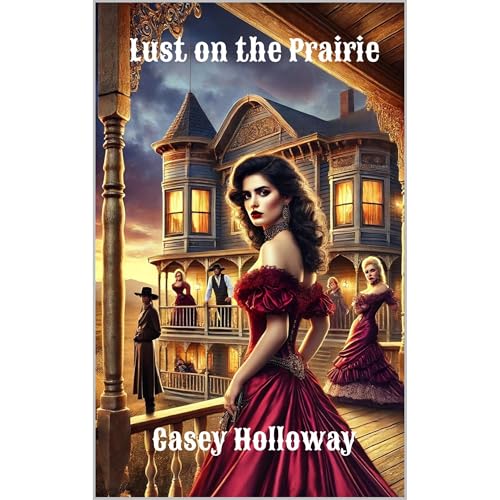

The prairie has long been imagined as a place of openness and restraint, a vast stretch of land where the sky dominates thought and human ambition is reduced to the basics of shelter, food, and endurance. Yet beneath the tall grasses and endless horizons, another story has always unfolded—one not of simplicity, but of longing. “Lust on the prairie” is not merely a phrase about forbidden romance or bodily desire; it is a lens through which we can understand the deeper cravings that shaped life on the plains: hunger for land, yearning for connection, thirst for power, and the restless pull of dreams that refused to stay quiet.
This article explores lust in its broadest, most human sense—desire in all its forms—and how it manifested in prairie life. From emotional yearning to material ambition, from spiritual longing to moral conflict, the prairie was never empty of passion. It was a place where desire echoed loudly precisely because the landscape itself seemed so silent.
The Prairie as a Stage for Desire
The prairie’s defining feature is space—wide, open, and seemingly endless. For those who lived there, this openness intensified emotion. In crowded cities, desire could be distracted or diluted. On the prairie, it had nowhere to hide.
Isolation sharpened longing. A single neighbor might live miles away. A letter from a loved one could take weeks to arrive. A glance, a gesture, or a shared task could take on enormous emotional weight. Lust, in this environment, was not always physical. Often, it was emotional or imaginative, born from loneliness and sustained by hope.
The land itself inspired desire. Settlers looked at the prairie and saw possibility: ownership, prosperity, legacy. This was a different kind of lust—the craving to possess, to control, to transform wild land into something permanent. Fields plowed by hand became symbols of victory over uncertainty, and that victory was deeply intoxicating.
Emotional Longing in a World of Silence
One of the most powerful forms of lust on the prairie was emotional longing. Men and women who left families behind carried with them memories that grew stronger in isolation. Love letters were reread until the ink faded. Familiar voices were recalled in moments of exhaustion. Desire became a companion, sometimes comforting, sometimes painful.
Marriages on the prairie were often shaped by necessity as much as affection. Yet even within practical unions, desire could grow quietly. Shared hardship created intimacy. Working side by side, surviving storms, illness, and loss together forged bonds that ran deep. Lust here was not sudden or dramatic; it was slow-burning, built on trust and shared endurance.
At the same time, emotional desire could also lead to tension. Unfulfilled longing might turn into resentment or regret. Dreams of a different life—one left behind or never lived—haunted many prairie dwellers. The prairie did not erase desire; it amplified it by stripping away distractions.
Physical Desire and Moral Boundaries
Physical lust existed on the prairie, but it was shaped by strict social expectations and harsh realities. Communities were small, reputations fragile, and privacy rare. Desire had to navigate the watchful eyes of neighbors and the moral codes brought from distant homelands.
Yet desire does not disappear simply because it is restricted. In fact, boundaries often intensify it. A brief encounter, an accidental touch, or a shared secret could carry enormous emotional weight. Physical lust was often expressed indirectly, through glances, gestures, or unspoken understanding.
For some, this tension created inner conflict. Religious beliefs clashed with natural impulses. Guilt followed desire, and restraint became a daily discipline. The prairie, with its stark contrasts between freedom and limitation, mirrored this struggle perfectly.
Lust for Land and Ownership
Perhaps the most socially accepted form of lust on the prairie was the desire for land. This craving was celebrated, encouraged, and even rewarded. To own land was to claim identity, security, and status. The prairie promised abundance, and that promise fueled relentless ambition.
This lust for land drove people to extraordinary effort. They endured droughts, blizzards, crop failures, and financial ruin rather than abandon their claims. The land became more than property; it became a symbol of worth. Losing it felt like personal failure, while expanding one’s holdings felt like triumph.
Yet this desire also carried moral complexity. Indigenous peoples were displaced, ecosystems altered, and communities divided by competition. Lust for ownership blurred ethical lines, justifying harm in the name of progress. The prairie witnessed these contradictions silently, bearing the marks of human ambition long after individual lives ended.
Power, Control, and Social Desire
Beyond land, there was lust for influence. In small prairie towns, social power mattered greatly. Being respected, feared, or admired offered a sense of control in an otherwise unpredictable environment. This desire shaped behavior, alliances, and conflicts.
Local leaders—whether landowners, religious figures, or merchants—often held disproportionate influence. Their authority could be benevolent or oppressive, but it was rarely neutral. Lust for control could lead to generosity or cruelty, depending on character.
Social desire also affected personal identity. People wanted to belong, to be seen as respectable, capable, and moral. This longing influenced choices about marriage, work, and public behavior. Even rebellion was a form of desire—the desire to be different, to escape expectations, to claim independence.
The Role of Women and Hidden Desires
Women’s desires on the prairie were often constrained by social roles, but they were no less powerful. Expected to embody virtue, endurance, and sacrifice, many women carried inner lives rich with longing. Their lusts were frequently intellectual, emotional, or creative—yearnings for education, autonomy, or recognition.
Some found fulfillment through writing, teaching, or community leadership. Others felt trapped, their desires suppressed by duty. The prairie demanded strength, but it did not always reward ambition equally.
Romantic desire, when unfulfilled, could become a source of quiet sorrow. Yet even in restriction, desire found expression—in resilience, imagination, and hope passed down to children. Women shaped the emotional landscape of the prairie in ways history often overlooked.
Nature as an Object of Desire
Interestingly, the prairie itself became an object of longing. Its beauty, harsh and subtle, inspired deep attachment. Sunsets stretching across the horizon, the sound of wind through grass, the rhythm of seasons—these elements stirred something primal.
This desire for connection with nature was both spiritual and emotional. Many felt closest to themselves when alone with the land. The prairie offered a sense of belonging that human relationships sometimes could not.
At the same time, this attachment could be possessive. Loving the land did not prevent its exploitation. Desire, even when rooted in appreciation, can carry contradictions.
Conflict Between Desire and Survival
Life on the prairie constantly forced choices between desire and necessity. Dreams were postponed for practicality. Passion was weighed against survival. Not every longing could be fulfilled without consequence.
This tension defined prairie life. People learned to negotiate with their desires, to reshape them into forms that fit reality. Lust became patience. Ambition became perseverance. Love became loyalty.
Those who failed to adapt often left or broke under pressure. Those who stayed learned that desire, when tempered, could be a source of strength rather than destruction.
Legacy of Lust on the Prairie
The legacy of lust on the prairie is not one of scandal, but of complexity. It reminds us that human desire does not require luxury or abundance to thrive. In fact, scarcity often intensifies it.
The prairie shaped desire into quieter forms, but it never eliminated it. Longing drove settlement, built communities, fueled conflict, and inspired resilience. It left traces in family stories, landscapes, and cultural memory.
Understanding lust on the prairie means understanding humanity itself. Wherever people live—no matter how open or empty the land may seem—they carry with them desires that shape their choices and define their lives.
Conclusion: Desire Beneath the Open Sky
“Lust on the prairie” is ultimately a story of human contradiction. It is about restraint and indulgence, hope and disappointment, possession and surrender. The prairie did not erase desire; it clarified it. Stripped of excess, people confronted what they truly wanted—and what they were willing to sacrifice to obtain it.