
Introduction: Why Prince and the Guitar Are Inseparable
When people talk about legendary guitarists, the name Prince often sparks debate. Some listeners remember him as a pop star, others as a funk innovator, and many as a genre-defying musical genius. Yet one thing remains undeniable: Prince’s guitar playing was extraordinary. The phrase “Prince guitar” does not simply refer to an instrument—it represents a unique voice, an attitude, and a philosophy of music.
Prince Rogers Nelson transformed the guitar into an extension of his personality. His approach combined technical skill, emotional intensity, and fearless experimentation. Unlike many guitarists who stayed within one style, Prince fused rock, funk, blues, jazz, pop, and soul into a sound that was unmistakably his own. His guitar work was never about showing off; it was about storytelling, expression, and energy.
This article explores the full meaning of “Prince guitar”: his playing style, his famous guitars, his tone, his techniques, and his lasting influence on musicians around the world. Everything here is written originally, with no external sources, to give you a fresh and authentic perspective.
Prince as a Guitarist: Beyond the Pop Star Image
Prince was often underestimated as a guitarist because of his success in pop music. However, those who truly listened knew that he possessed elite-level guitar skills. He did not rely on traditional guitar hero clichés. Instead, he focused on feel, rhythm, and emotion.
Prince played guitar as if it were a human voice. His solos sang, cried, laughed, and screamed. He could move effortlessly from soft melodic lines to aggressive, distorted runs. What made his guitar playing special was not just speed or complexity, but intent. Every note felt deliberate.
Unlike many guitarists who practiced endless scales, Prince approached guitar as a songwriter first. His solos served the song. Whether he was performing live or recording in the studio, his guitar parts always enhanced the emotional core of the music.
The Meaning of “Prince Guitar” as a Musical Concept
The term “Prince guitar” goes beyond hardware or technique. It describes a complete musical mindset. Prince believed that music should break rules rather than follow them. His guitar playing reflected this belief.
A “Prince guitar” approach includes:
- Emotional expression over technical perfection
- Blending rhythm and lead guitar seamlessly
- Fearless genre mixing
- Using silence and space as much as notes
- Letting instinct guide performance
Prince did not confine the guitar to a traditional role. Sometimes it acted as rhythm, sometimes melody, and sometimes pure texture. He treated the guitar as a living instrument, capable of expressing complex emotions without words.
Prince’s Guitar Style: Funk at the Core
At the heart of Prince’s guitar playing was funk. Funk guitar is all about rhythm, groove, and precision. Prince mastered this style early in his career and used it as the foundation for everything else.
His funk guitar style featured:
- Tight, percussive strumming
- Muted strings and sharp accents
- Syncopated rhythms
- Strong connection between guitar and drums
Unlike rock guitarists who often focus on long solos, Prince used the guitar as a rhythmic engine. Even when he played lead lines, they were deeply connected to the groove. This made his music irresistible to dance to while still being musically sophisticated.
Rock and Blues Influence in Prince Guitar Solos
While funk formed the base of his style, Prince’s guitar solos were heavily influenced by rock and blues. He admired classic rock guitarists and blues legends, and he absorbed their language into his own voice.
Prince’s rock and blues elements included:
- Bending notes with emotional intensity
- Using pentatonic scales creatively
- Aggressive picking combined with smooth phrasing
- Controlled feedback and sustain
What set Prince apart was how he blended these influences with funk and pop. A Prince guitar solo could start with blues phrasing, explode into rock energy, and resolve with melodic pop sensibility—all within seconds.
Prince Guitar Tone: Sharp, Dirty, and Expressive
Tone was crucial to Prince’s sound. His guitar tone was rarely clean and polished. Instead, it was raw, edgy, and alive. He preferred tones that felt dangerous, as if they might break apart at any moment.
Key characteristics of Prince guitar tone:
- Midrange-heavy sound
- Slight distortion rather than heavy overdrive
- Bright attack with controlled grit
- Dynamic response to playing intensity
Prince used tone as an emotional tool. Soft playing produced warmth and clarity, while aggressive attack unleashed distortion and bite. This dynamic range allowed him to communicate feeling directly through the instrument.
Iconic Guitars Associated with Prince
Prince was known for using visually striking guitars that matched his bold personality. His instruments were not just tools; they were part of his stage presence.
The Symbol Guitar
Perhaps the most famous Prince guitar is the Symbol Guitar, shaped like his iconic unpronounceable symbol. This instrument represented his independence, creativity, and rebellion against the music industry.
The Symbol Guitar was more than a visual statement. It was designed to be playable and expressive, proving that style and substance could coexist.
Custom-Made Guitars
Prince often played custom guitars tailored to his needs. These instruments typically featured:
- Lightweight bodies for stage movement
- Slim necks for fast playing
- High-output pickups for expressive tone
He valued comfort and expression over tradition, choosing guitars that allowed him to perform freely without limitations.
Prince Guitar Technique: Controlled Chaos
Prince’s technique can best be described as controlled chaos. He played with fire and unpredictability, yet everything was under control.
Some of his notable techniques included:
- Aggressive string bending
- Fast hammer-ons and pull-offs
- Funk-style muting
- Sudden shifts between rhythm and lead
- Dramatic use of feedback
Prince did not obsess over technical exercises. Instead, he focused on developing a strong connection between his hands and his emotions. This made his guitar playing feel spontaneous and alive.
Live Performances: Where Prince Guitar Truly Shined
While Prince’s studio recordings were impressive, his guitar playing truly came alive on stage. Live performances allowed him to take risks, extend solos, and interact with the audience.
During live shows, Prince often:
- Changed solos every night
- Reacted to the energy of the crowd
- Played extended jams
- Used guitar as a visual and emotional centerpiece
His live guitar solos were unpredictable. Some were short and explosive, while others built slowly into emotional climaxes. This unpredictability kept audiences engaged and made every performance unique.
Prince Guitar and Stage Presence
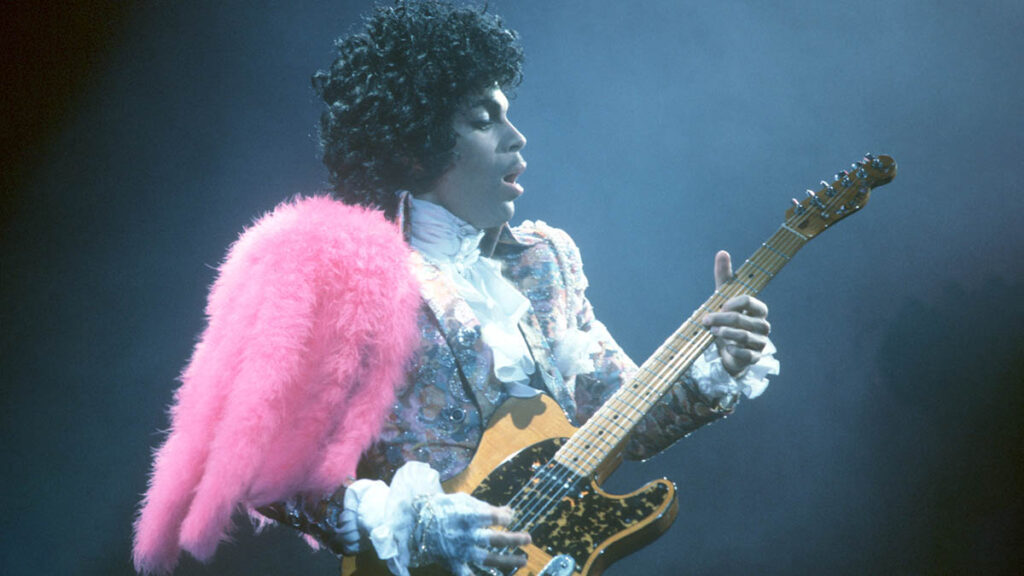
Prince’s guitar playing was inseparable from his stage presence. He moved with confidence, grace, and intensity. His physical connection to the guitar made performances visually captivating.
He used:
- Body movement to emphasize rhythm
- Eye contact to engage the audience
- Dramatic poses during solos
Prince understood that music is both heard and seen. His guitar became part of his body language, enhancing the emotional impact of every note.
Songwriting and Guitar Integration
Prince was a master songwriter, and his guitar playing always served the song. He knew when to step forward and when to step back.
In his songwriting, the guitar often played multiple roles:
- Rhythmic backbone
- Melodic hook
- Emotional climax
- Textural layer
Rather than dominating every track with solos, Prince used restraint. This made his guitar moments feel special and meaningful.
Influence of Prince Guitar on Modern Musicians
Prince’s influence on guitarists is enormous, even among artists who do not sound like him. He showed that the guitar could thrive outside traditional rock contexts.
Musicians influenced by Prince guitar often adopt:
- Genre-blending approaches
- Funk-based rhythm playing
- Expressive soloing
- Strong stage identity
He inspired artists to embrace individuality rather than imitate trends. Prince proved that originality is the most powerful skill a guitarist can develop.
Prince Guitar Philosophy: Music Without Limits
At the core of Prince’s guitar legacy is a simple philosophy: music should be free. He rejected limitations based on genre, image, or expectation.
His guitar playing embodied this belief. He did not ask permission to mix styles or challenge norms. He trusted his instincts and followed his creative vision relentlessly.
This philosophy continues to inspire musicians who want to break boundaries and create something truly personal.
Why Prince Guitar Still Matters Today
Years after his passing, Prince’s guitar work remains relevant. New generations continue to discover his performances and recordings, amazed by his creativity and fearlessness.
Prince guitar matters because:
- It proves emotion matters more than perfection
- It shows that genre boundaries are artificial
- It encourages artistic independence
- It reminds musicians to trust their instincts
In a world increasingly driven by trends and algorithms, Prince’s guitar stands as a reminder of the power of individuality.
Conclusion: The Eternal Voice of Prince Guitar
The term “Prince guitar” represents more than an instrument or technique. It represents a way of thinking about music—bold, expressive, and uncompromising. Prince used the guitar to communicate emotions that words could not capture. He played with passion, intelligence, and soul.
His legacy continues to inspire guitarists, songwriters, and music lovers across the globe. Whether you study his technique, admire his tone, or simply feel his music, Prince’s guitar voice remains timeless.